🕓 Last updated: February 23, 2026
How to Plan Your Retro Game Room Layout
Before you purchase a single piece of gaming furniture or hang a single poster, you need to assess the room itself. The ideal retro game room occupies a space where you control natural light, since CRT monitors and older display technologies perform poorly under direct sunlight. Basements, spare bedrooms, and converted garages each offer distinct advantages. Basements naturally limit daylight intrusion and tend to have better acoustic isolation. Spare bedrooms already carry electrical infrastructure. Garages, once insulated properly, offer the most square footage for arcade cabinet setups.
Once you identify the space, measure it carefully and sketch a floor plan. Allocate zones: a seating area for console gaming, a standing zone for arcade cabinets, and a display zone for collectibles and shelving. Leaving at least 90 centimeters of walkway between furniture pieces ensures comfortable movement during gaming sessions.
Retro Game Room Zones: Organizing by Era and Activity
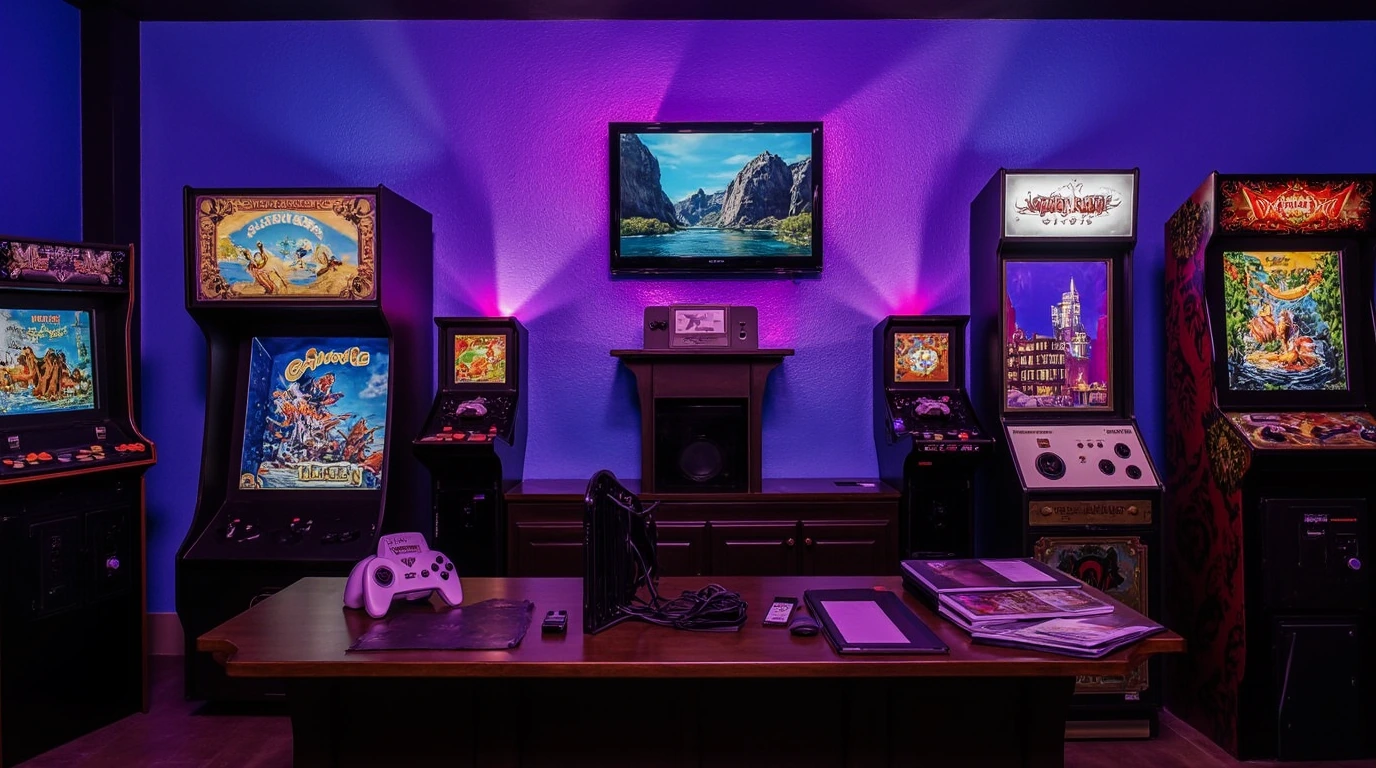
A well organized retro game room separates activities into distinct zones. The arcade zone houses your upright or cocktail cabinet machines and demands the most floor space. The console zone centers around a television or monitor setup where players sit comfortably on dedicated gaming furniture. The collector zone uses wall mounted shelving to display cartridges, figurines, boxed games, and hardware. Giving each zone its own lighting personality for example, red neon near the arcade area and warm amber near the console zone reinforces the spatial separation and adds visual depth.
Retro Game Room Aesthetics: Color, Walls, and Atmosphere
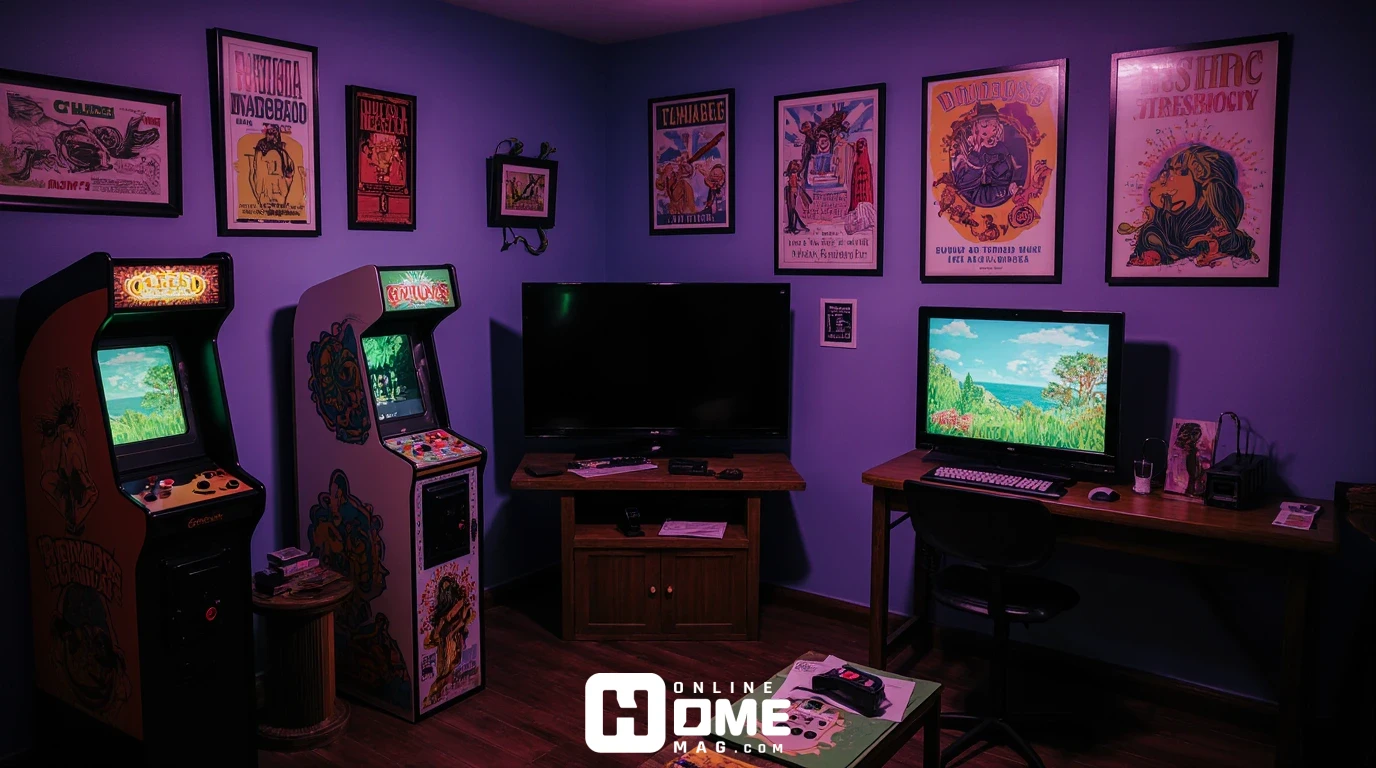
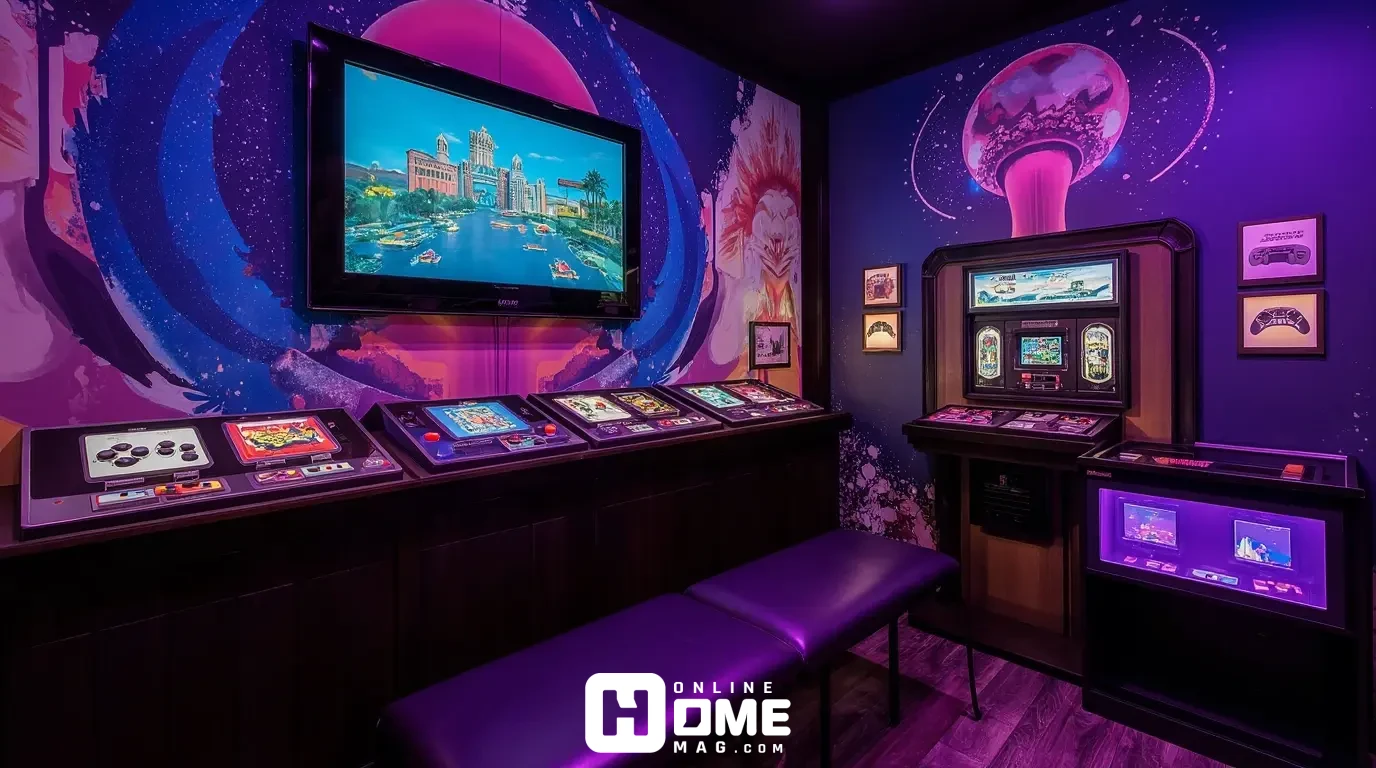
Color carries more atmospheric weight in a retro arcade game room than almost any other element. Dark base colors deep charcoal, navy, forest green, or flat black form the best foundation because they absorb ambient light and make neon accents pop dramatically. Pair your dark base with two or three accent colors drawn directly from classic arcade cabinet artwork: electric blue, hot pink, golden yellow, or safety orange. Avoid overly neutral palettes; the retro gaming aesthetic demands contrast and visual energy.
Wall Treatments: Posters, Murals, and Wallpaper
Walls in a retro game room do significant visual work. Large format framed posters of classic arcade titles Pac Man, Donkey Kong, Street Fighter II, or Space Invaders immediately establish the era. Black frames with thin white matting give a gallery quality feel without modernizing the look too aggressively. If your budget allows, commission a custom pixel art mural that covers an entire wall. Many digital artists specialize in this style and can tailor the imagery to your favorite games or consoles.
Retro themed wallpaper has also gained commercial availability in recent years. Pixel grid patterns, circuit board graphics, and 8 bit character repeating prints all work well and install quickly. For renters who cannot paint or hang heavy fixtures, high quality peel and stick wallpaper solves the problem elegantly without damaging surfaces.
Retro Game Room Furniture: Seating, Shelving, and Cabinets
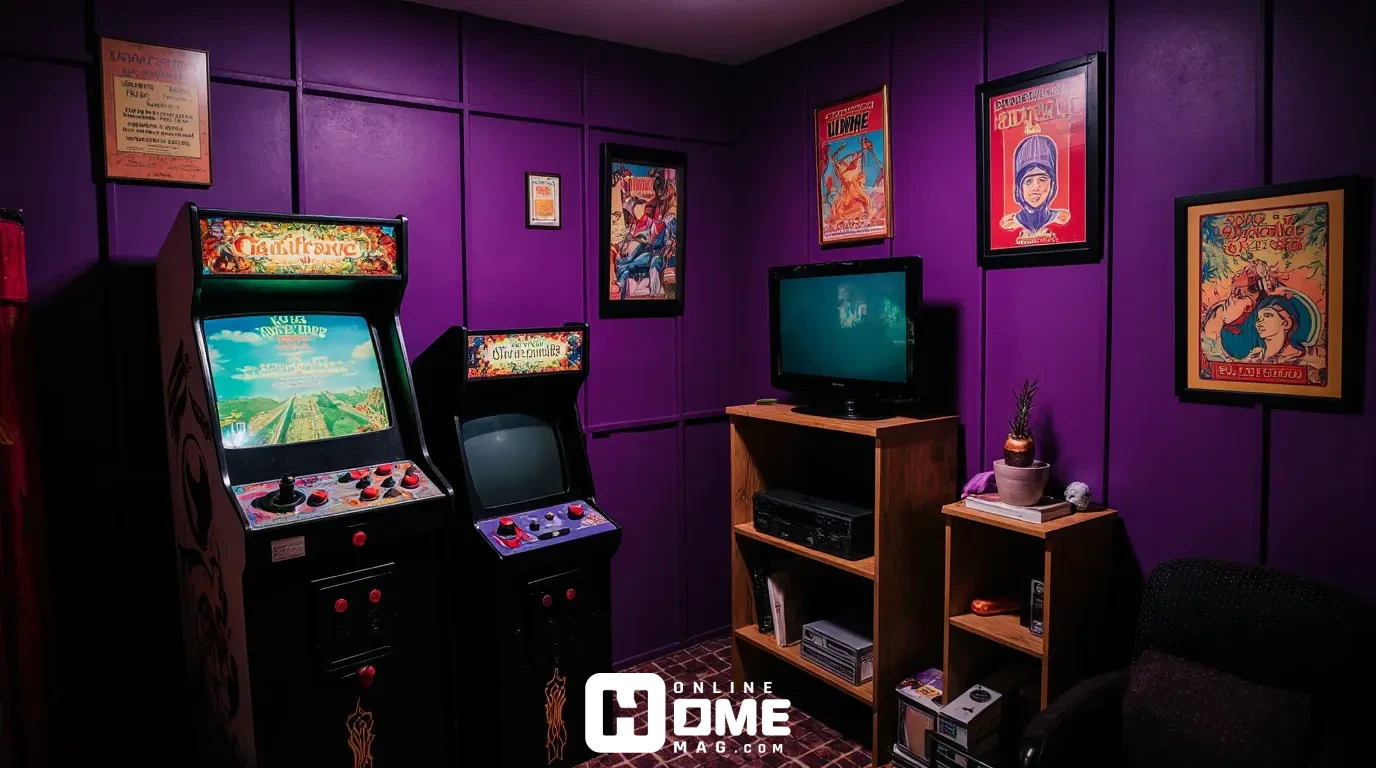
Selecting the right gaming furniture for a retro game room means balancing period authenticity with modern ergonomic needs. Classic leather bucket seats or low profile sofas in dark vinyl work well for console zones. Bean bags in solid dark colors add casual seating without disrupting the aesthetic. For the primary gaming position, consider a mid century modern office chair reupholstered in vinyl or leather it reads as period appropriate while supporting long sessions comfortably.
Avoid modern RGB gaming chairs with aggressive styling. Their aesthetic conflicts directly with the retro atmosphere you are building. If you compare the available options in a Modern Gaming Room setup versus a retro build, the contrast makes clear that chair design alone shifts the entire room’s tone significantly.
Shelving and Display Solutions for Retro Collectibles
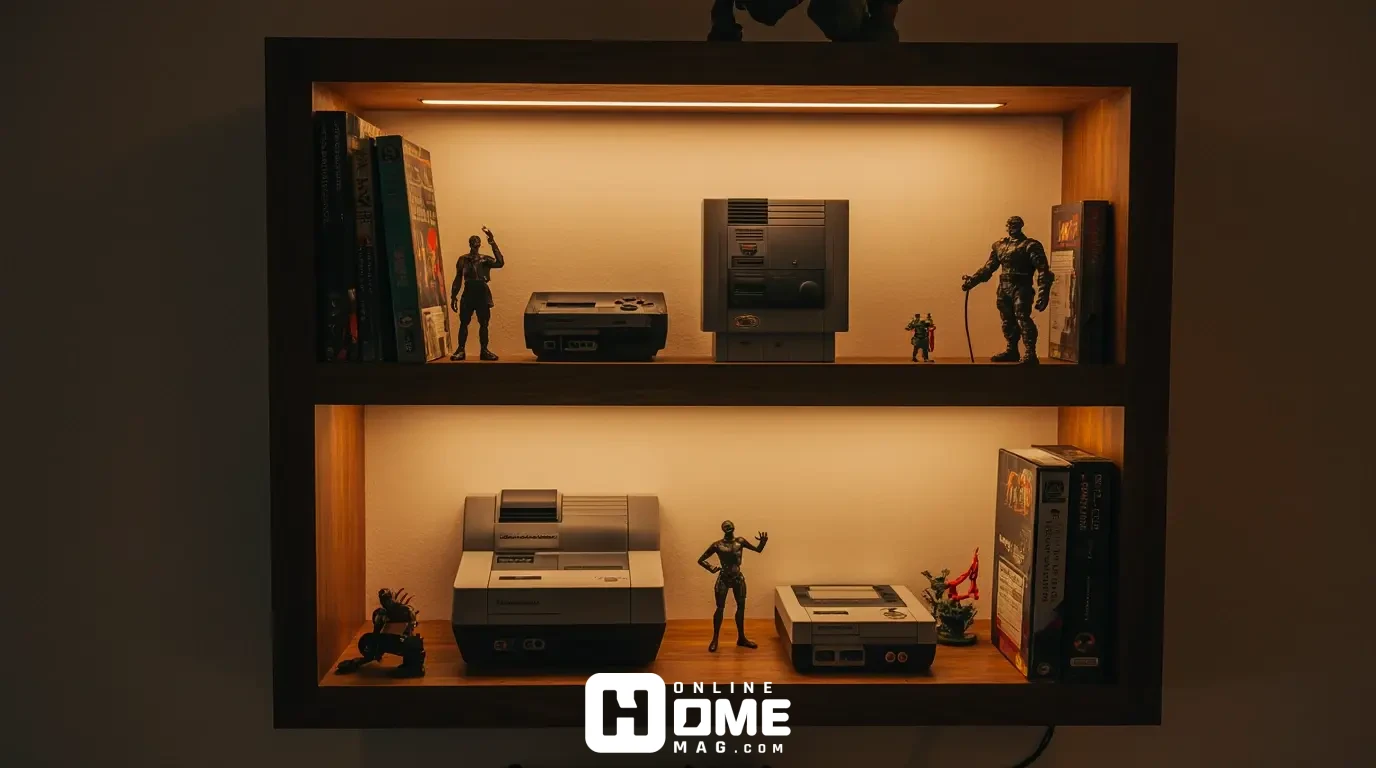
Shelving serves both functional and decorative purposes in a retro video game room. Floating shelves at varying heights create dynamic wall compositions. Use deeper shelves at least 25 centimeters to accommodate boxed games, hardware, and figurines without overcrowding. Backlit shelving using LED strip lights installed at the rear transforms a standard display into a dramatic showcase. Organize collections either by console generation or by color for maximum visual impact.
For cartridge storage, purpose-built acrylic cases allow display and protection simultaneously. Stackable vintage style wooden crates also provide an authentic storage solution that doubles as decor.
Lighting and Audio: The Technical Foundation of a Retro Game Room
Lighting transforms a plain room into an immersive retro game room faster than any other intervention. The lighting strategy rests on three layers. Ambient lighting provides the base illumination using dimmable warm or cool bulbs set at low intensity. Accent lighting uses neon signs, LED strips behind furniture and shelving, and under cabinet strips to create depth and atmosphere. Task lighting focuses specifically on gaming areas to prevent eye strain during extended sessions.
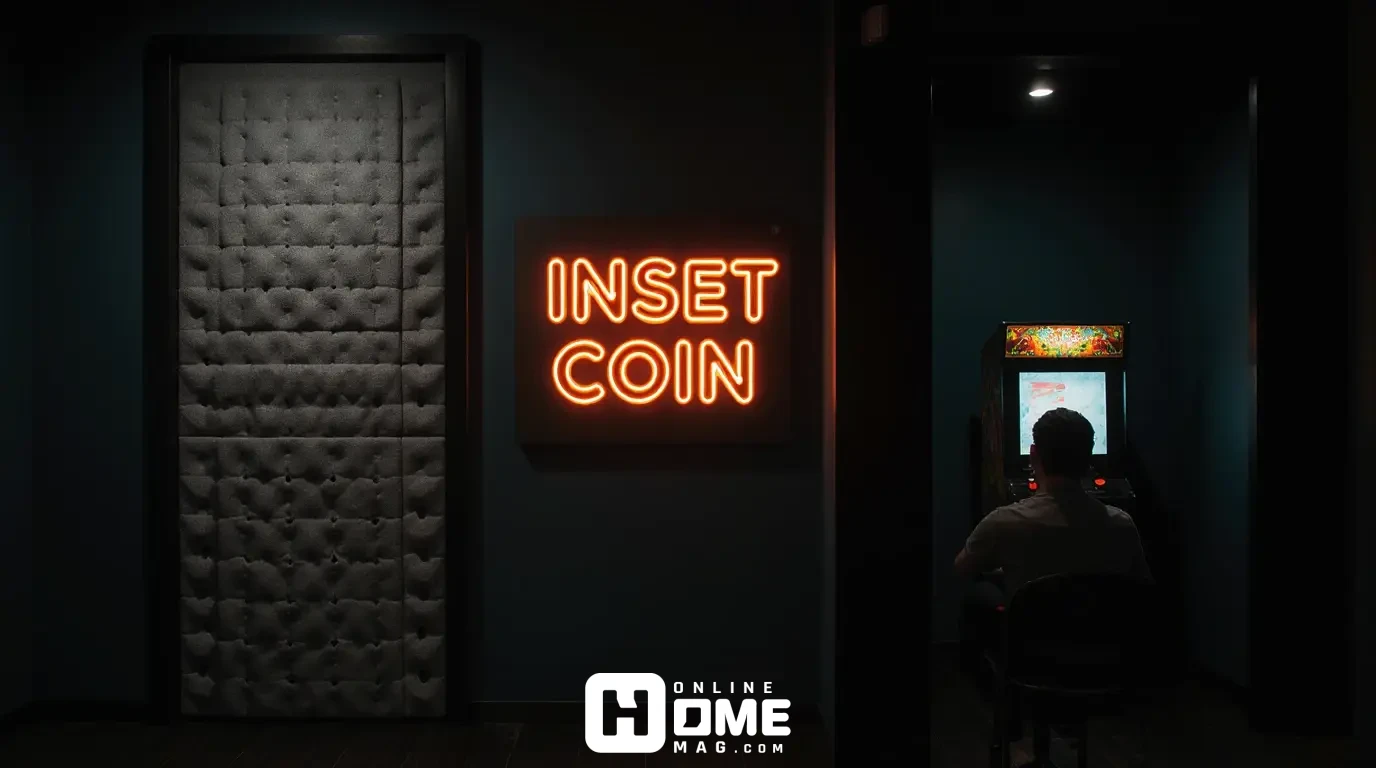
Neon signs deserve special mention as signature elements of the retro arcade game room aesthetic. Classic phrases like INSERT COIN, GAME OVER, or PLAYER ONE in red or blue neon immediately anchor the room’s identity. LED neon flex a modern alternative to traditional glass neon costs significantly less, draws less power, and produces no heat, making it safer for enclosed spaces. Investing in the Best Audio and Lighting Equipment for Your Gaming Room means treating lighting as an interactive system rather than a static fixture: dimmers, smart bulbs, and scene controllers let you shift atmosphere between casual play and tournament-style intensity.
Acoustic Treatment and Sound Design
Sound quality defines how fully you experience retro gaming. The tinny, compressed audio of vintage hardware benefits enormously from quality speaker systems that reproduce its character faithfully. A stereo amplifier paired with bookshelf speakers positioned at ear level delivers a significant upgrade over television speakers without compromising the retro aesthetic. Choose speaker designs with wood veneer cabinets in walnut or teak they read as period-appropriate and sound excellent.
Acoustic Foam Panels for Gaming Rooms address the parallel problem of room echo and sound bleed. Hard surfaces bare walls, concrete floors, glass create reflective environments that muddy sound and cause listening fatigue. Acoustic foam panels in classic wedge or pyramid patterns absorb mid and high frequencies effectively. You can frame them or cover them in fabric that matches your room’s color palette so they contribute to the aesthetic rather than working against it. Install panels primarily at first reflection points: the wall directly beside your primary listening position and the wall behind your display.
Displays and Hardware: Building the Authentic Retro Game Room Setup
The display question divides retro gaming communities significantly. Purists argue that CRT televisions the cathode ray tube sets that originally shipped alongside classic consoles provide the only authentic visual experience. CRTs render the scanlines, phosphor bloom, and color characteristics that game designers intended. A Sony Trinitron or a PVM (Professional Video Monitor) in working condition remains the gold standard for pixel perfect retro gaming.
Sourcing CRTs requires patience. Check estate sales, thrift stores, and online marketplaces consistently. Expect to pay a premium for PVMs since collectors have recognized their value. If a CRT proves impractical due to weight, space, or availability modern flat panels with specific upscaling devices like the Retro TINK 5X Pro deliver results that approximate the CRT experience convincingly while fitting a contemporary room more easily.
Organizing Your Console and Accessory Collection
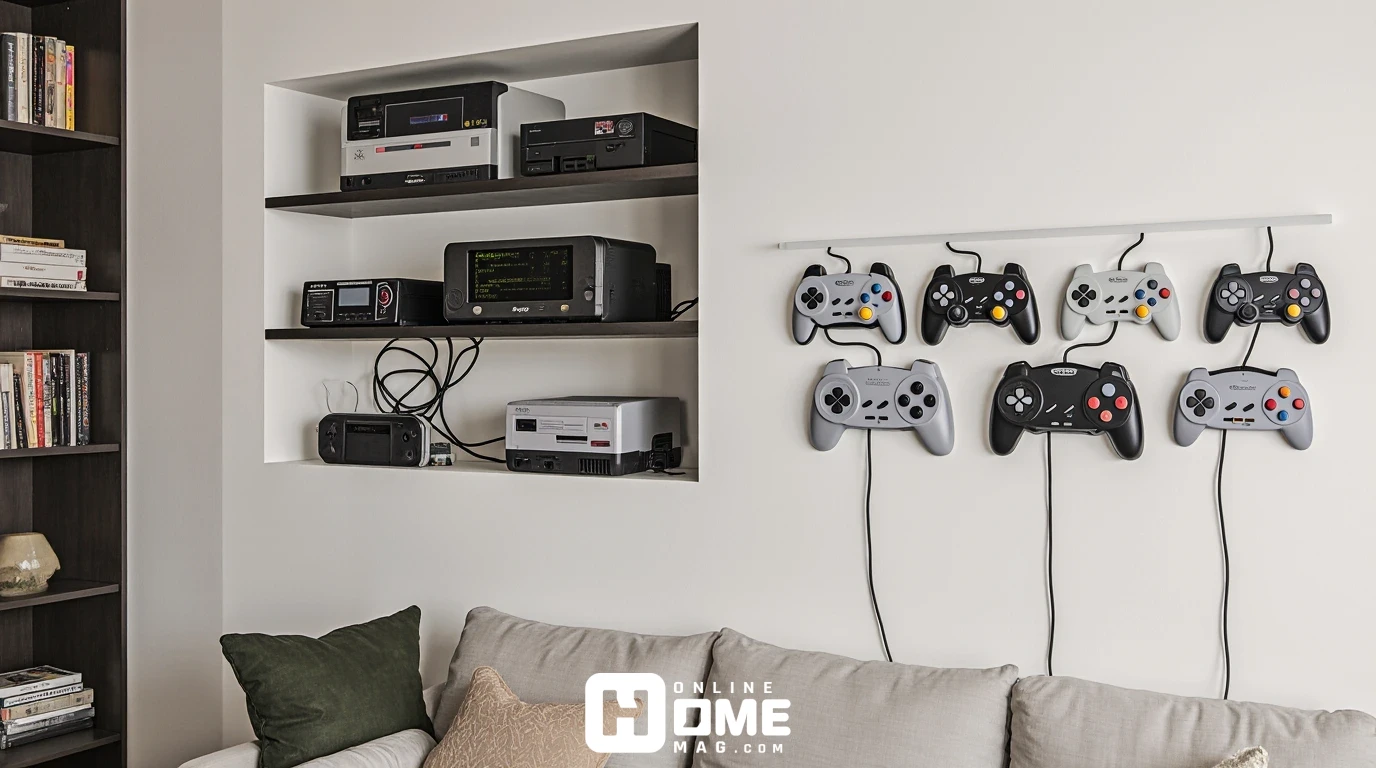
Presentation of hardware and Gaming Accessories elevates a retro game room from enthusiast space to curated environment. Display consoles on open shelving at eye level with their controllers neatly coiled beside them. Use cable management channels or vintage-style fabric cable sleeves to keep wiring organized. Power strips hidden inside furniture or behind shelving keep surfaces clean without compromising access.
Controllers deserve individual display attention. Wall-mounted hooks or shallow shadow boxes showcase controllers as the design objects they genuinely are. A row of original NES, SNES, Sega Genesis, and PlayStation controllers displayed chronologically tells a visual history of the medium that collectors and casual visitors alike appreciate.
Retro Game Room Ideas by Budget
A tight budget demands prioritization. Spend the largest portion on lighting since it delivers the greatest atmospheric return per dollar. Purchase LED neon flex strips for a single feature wall, add two or three framed retro posters, and apply peel and stick wallpaper to one accent wall. Source a working CRT from a local thrift store and connect it to an original console found at a garage sale. A simple bean bag or repurposed low profile sofa completes the seating. The result reads authentically retro at a fraction of premium build costs.
Mid Range Retro Arcade Game Room: $500 to $2,500
The mid range budget unlocks significantly more options. Invest in a quality neon sign as a room centerpiece, add acoustic foam panels in a color matched frame to treat the room acoustically, and purchase a dedicated retro gaming cabinet either a multi game MAME cabinet or a single title original. Upgrade seating to a period appropriate vinyl chair and install floating backlit shelving for your collection. A Retro TINK up scaler connected to a quality flat panel display completes the visual setup.
High End Retro Video Game Room: $2,500 and Above
High end builds distinguish themselves through custom fabrication and premium sourcing. Commission a pixel art mural from a professional artist. Install a professional grade audio system with vintage aesthetic bookshelf speakers driven by a tube amplifier. Source multiple original arcade cabinets in excellent condition. Invest in custom built gaming furniture a dedicated console station with integrated cable management and lighting designed to match the room’s specific color palette. Hire an electrician to install independent circuit breakers for arcade machines to prevent interference with other room electronics. At this level, the retro game room becomes a genuinely gallery quality space.
Final Details That Complete the Retro Game Room Experience
Flooring choices affect both acoustics and aesthetics. Dark vinyl plank flooring or industrial rubber tiles in charcoal or black read as appropriately retro without demanding the maintenance of carpet. If you use carpet, choose a low pile option in a solid dark color to minimize dust accumulation around hardware.
Ceiling treatment often goes overlooked but significantly affects atmosphere. A flat black ceiling effectively lowers the perceived ceiling height and makes the room feel more intimate and immersive similar to a cinema auditorium. Install recessed spotlights on a dimmer circuit so you control exactly how much ceiling illumination reaches the space.
Sourcing Authentic Retro Gaming Items
Authenticity in a retro video game room comes from the objects you choose to display. Prioritize original hardware and software over reproductions wherever possible. Original manuals, warranty cards, and retail boxes carry significant visual and historical value. Attend retro gaming conventions and local swap meets where collectors often sell duplicates at fair prices. Build relationships with other collectors who can alert you when rare items enter the market.
Retro gaming stores in major cities sometimes carry original arcade cabinet marquees, control panels, and side art reproductions that dramatically improve the visual quality of machines you restore or modify. These details separate a thoughtfully built retro game room from a generic gaming space and reward visitors who look closely.
Building Your Retro Game Room: Where to Start
Every retro game room begins with a single decision: which era, which aesthetic, which games define the space. Once you answer that question, every subsequent choice from wall color to furniture selection to display hardware follows logically. Start with the elements that deliver the greatest impact for your current budget, then build incrementally. Lighting and a single statement piece, whether a neon sign, an arcade cabinet, or a perfectly framed poster wall, establish the room’s character immediately. Everything else refines and deepens that initial statement over time.
A well designed retro game room does not happen overnight, but each addition moves the space closer to the immersive, authentic environment you envision. The era that inspired you still has the power to inspire everyone who walks into the room you build around it.