Why Home Gym Flooring Deserves Its Own Budget Line
A lot of people treat flooring as an afterthought , something to grab cheap and swap out later if it doesn’t work. In practice, that usually backfires. Good gym flooring does three jobs at once: it protects the surface underneath (concrete, tile, hardwood, whatever you’ve got), it absorbs impact so your knees and lower back aren’t taking the full shock of every rep, and it cuts down on noise and vibration, which matters a lot if you’re training above a living room or next to a shared wall.
There’s also a durability angle. Cheap mats compress, tear, and shift out of place within months, especially under a squat rack or a treadmill. Investing a bit more up front in proper gym flooring usually means you’re not re buying it a year later.
The Difference Between Flooring and A Mat You Threw Down
It helps to separate two things people often lump together: gym flooring as a system, and a single mat as a patch job. A full gym flooring setup covers the entire room, interlocks or fits edge to edge, and is chosen based on what’s happening in that space , heavy lifting, cardio, yoga, or a mix. A single mat under a treadmill is fine for that one purpose, but it won’t do much if you’re also dropping weights nearby or want the whole room to feel consistent underfoot.
Rubber Gym Flooring: The Default for a Reason
If you ask ten people what to put down in a home gym, most of them will say rubber. Rubber gym flooring is the standard for a reason , it’s dense, it doesn’t compress permanently under heavy equipment, and it absorbs impact well enough to protect concrete subfloors from dropped weights. It also muffles sound better than foam alternatives, which is the main reason it’s so common in apartment or upstairs gym setups.
Rubber comes in a few different formats. Rolled rubber gives you a seamless surface across a whole room, which looks cleaner and leaves fewer seams for dust and debris to collect in. Interlocking rubber tiles are easier to install yourself and simpler to replace piece by piece if one section wears out. Both are legitimate options , the choice usually comes down to room size and whether you want a DIY install or a professional one.
Gym Floor Mats vs. Gym Flooring Tiles: Which One Fits Your Space
This is where a lot of people get stuck, so it’s worth breaking down plainly.
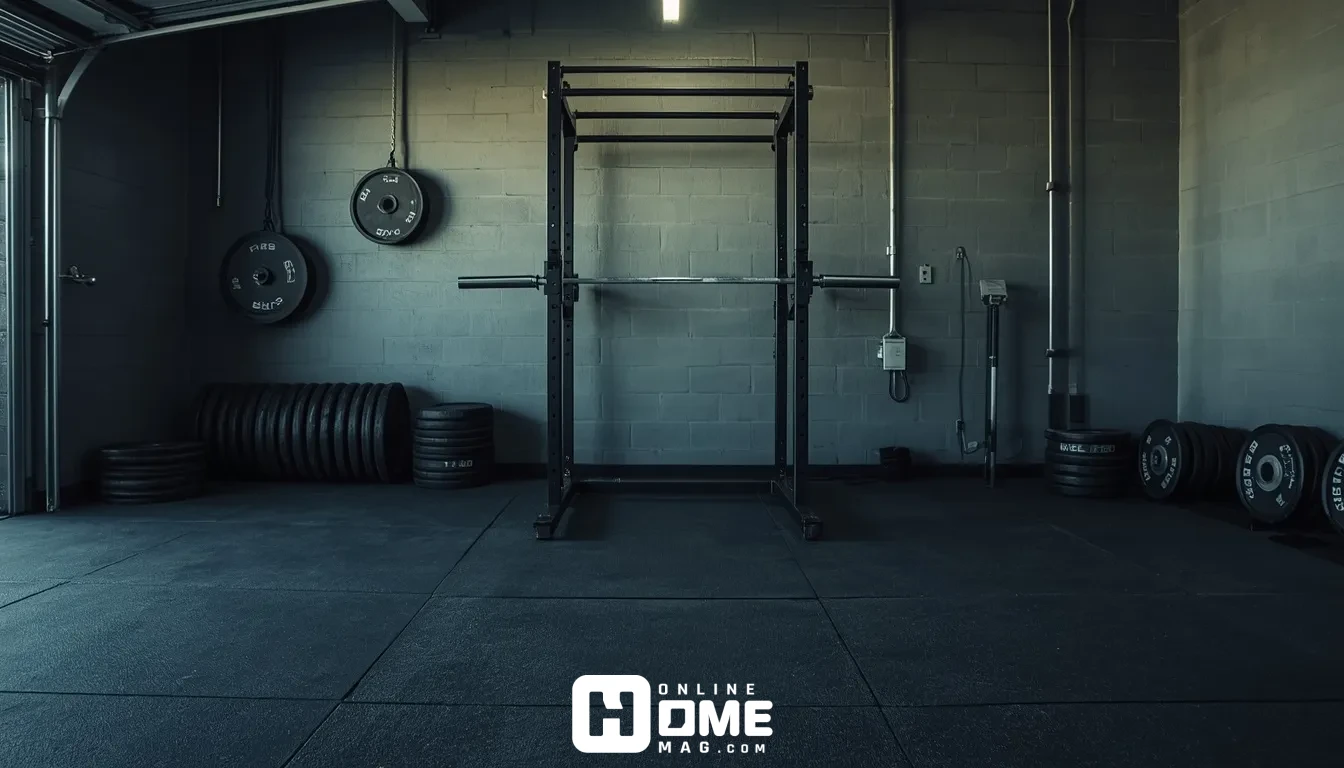
Gym floor mats are usually larger single pieces, often used under specific equipment like a treadmill, rower, or bike. They’re a good, low effort option if you’re only protecting one spot in a room that’s used for other things too say, a spare bedroom that’s half office, half workout space.
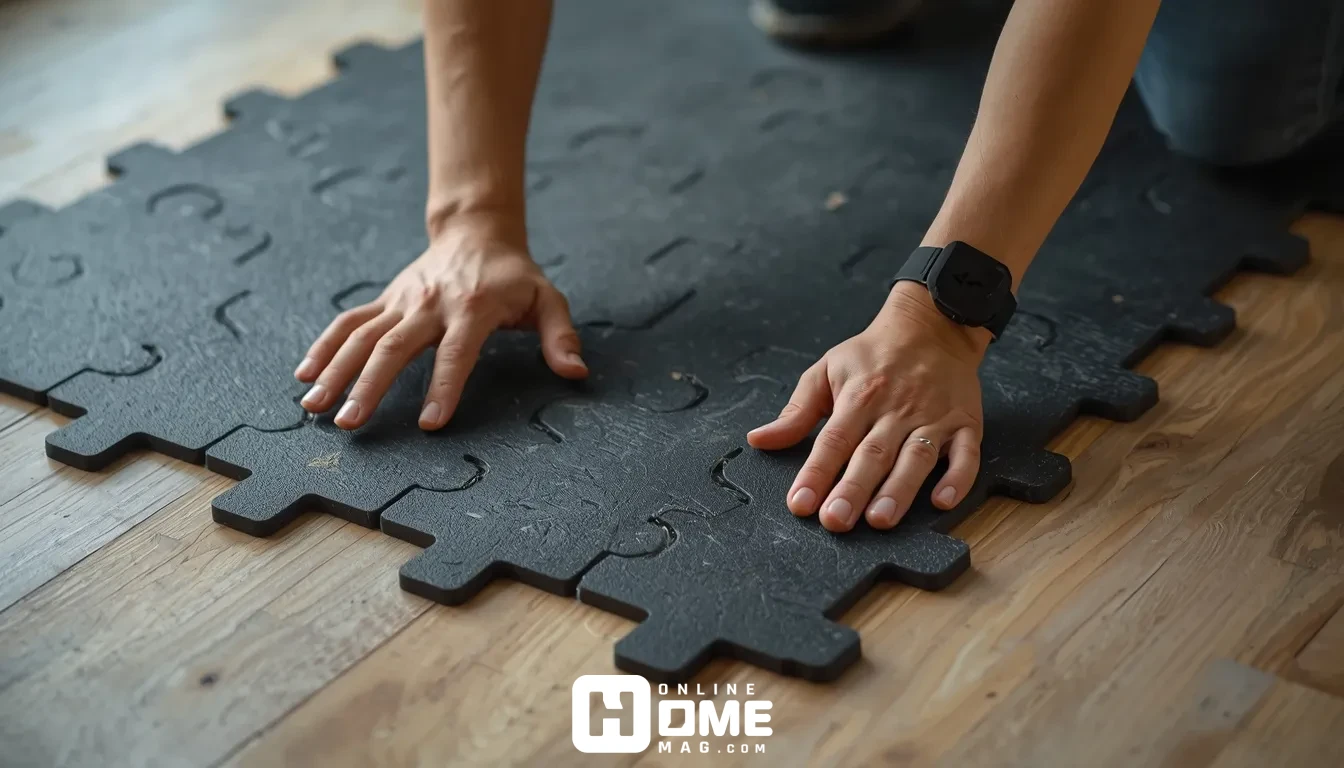
Gym flooring tiles, on the other hand, are modular. They interlock like puzzle pieces and are built to cover an entire floor. Tiles make more sense when the whole room is dedicated to training, because you get even coverage, consistent grip, and the ability to replace a single damaged tile without redoing the whole floor. If you’re setting up a dedicated space rather than a multipurpose room, tiles are usually the more practical long term choice.
Neither option is better in general , it really depends on how much of the room is actually being used for workouts.
Matching Flooring to How You Actually Train
Not every workout puts the same demand on a floor, and it’s worth being honest about what you’ll actually be doing before you buy.
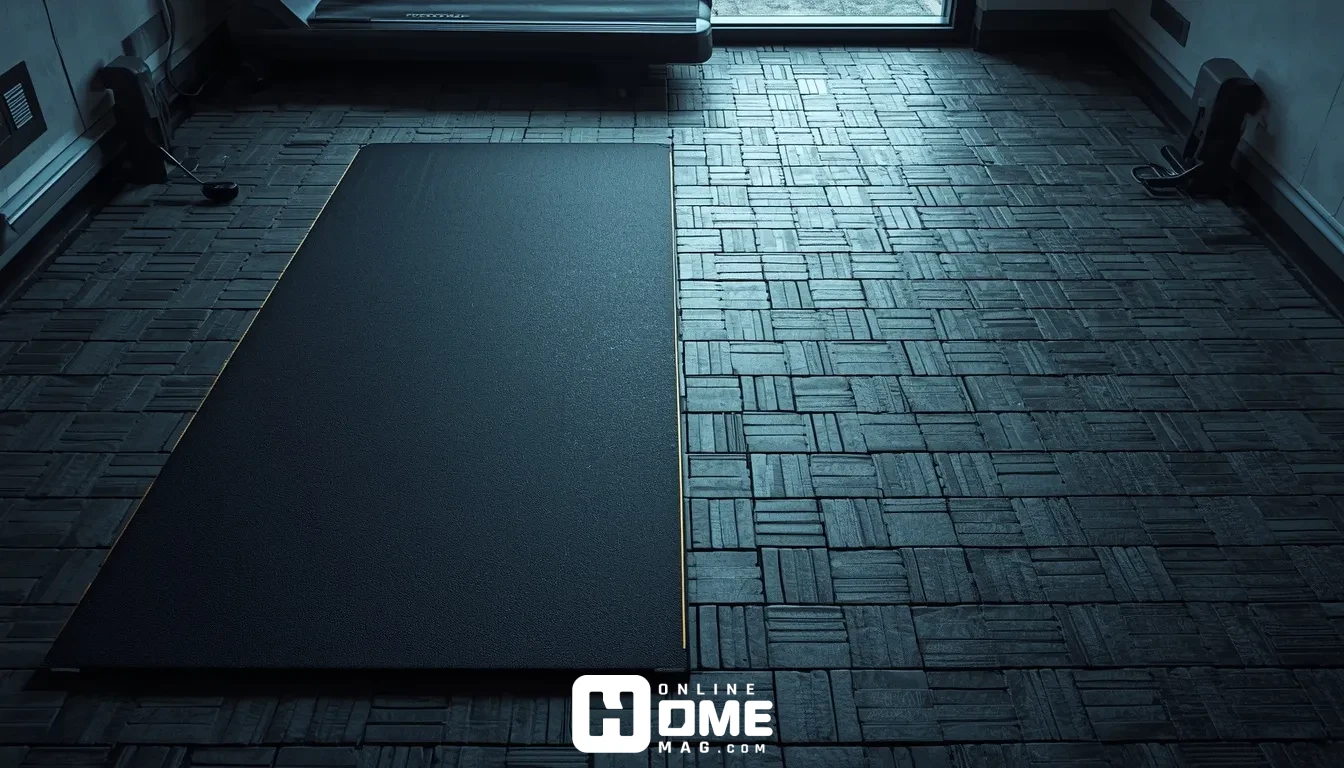
If you’re lifting heavy , barbells, dumbbells, a rack , you want thicker rubber, usually somewhere in the ¾ inch range or more, to handle dropped weight without the subfloor taking damage. If your routine is mostly cardio machines, a slightly thinner mat under the equipment is often enough, since the main concern there is vibration and noise rather than impact from dropped plates. For anything with floor work , yoga, mobility, bodyweight training , a bit of cushioning and a non slip surface matters more than sheer thickness.
This is also where the room itself starts to shape the decision. A garage gym has different needs than a spare bedroom, and a gym that doubles as a family space has different needs than one that’s just for you.
Turning a Garage Into an Actual Gym
Garages bring their own set of flooring problems , bare concrete, oil stains, temperature swings, sometimes a slight slope toward a drain. Flooring in this setup has to handle moisture and temperature changes without warping, on top of the usual demands of dropped weights and heavy equipment. If you’re in the middle of planning this kind of space, it’s worth reading through our guide on how to convert a garage to a gym, since flooring is only one part of getting a garage ready for regular training.
Designing a Gym That Actually Fits the People Using It
Flooring choices also shift depending on who’s using the space and what kind of gym you’re trying to build, not just what equipment sits on top of it.
If kids are going to be around the gym , even just playing nearby while a parent trains , softer, higher cushion flooring options make a real difference for safety, and it’s worth planning that from the start rather than adding it later. Our piece on building an indoor gym for kids goes into more detail on flooring and layout choices that hold up with children in the mix.
If you’re designing a space with more attention to comfort, aesthetics, and how the room actually feels to spend time in , not just function , flooring is one of the first things that changes the whole tone of the room. Lighter tones, smoother finishes, and tiles that look intentional rather than purely industrial go a long way. That’s a big part of what we cover in our guide to women’s home gym equipment and design, where flooring is treated as a design decision, not just a functional one.
And if the whole gym is being built around a higher end look and feel , think polished finishes, integrated storage, a space that could pass as part of the house rather than a converted utility room ,the flooring needs to match that standard too. We go deeper into this in our guide to building a luxury home gym, where flooring options extend beyond standard rubber into things like premium vinyl and engineered surfaces.
Installation: What to Actually Expect
Most rubber and foam flooring options are designed for DIY installation, which is part of why they’re so popular for home setups. Interlocking tiles typically just click together without adhesive, which also makes them easier to pull up and move if you ever relocate. Rolled rubber usually needs to be cut to size and, depending on the product, may benefit from double sided tape at the seams to keep it from shifting under heavy use.
One thing worth doing regardless of which type you choose: measure the room carefully and order slightly more material than the bare minimum. Cuts around doorways, support posts, or odd angles eat into your material faster than people expect, and running short mid install is a common and avoidable headache.
A Few Things That Are Easy to Overlook
Off gassing smell is common with new rubber flooring, it usually fades within a week or two with some ventilation, but it’s worth knowing about in advance so it doesn’t feel like a defect. Color also matters more than people expect: black rubber is the most common and most resistant to staining, but it can make a windowless room feel darker and smaller. Lighter or flecked tiles show wear less obviously over time and tend to make a small space feel more open.
It’s also worth checking weight tolerance if you’re planning to keep something heavy and stationary in one spot, like a power rack. Some thinner mats compress permanently under sustained weight, leaving visible indentations even after the equipment is moved.